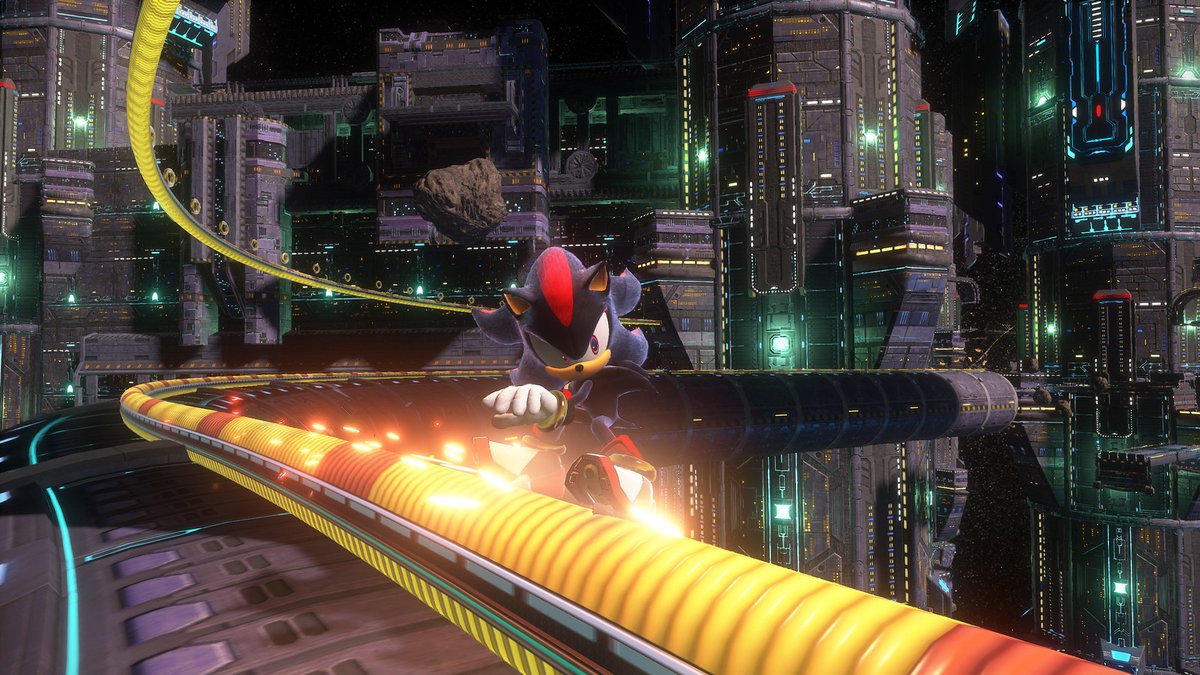
The blue blur and the ultimate life form. From their explosive first meeting to their complex, evolving dynamic, The Evolution of Sonic & Shadow's Rivalry has consistently defined some of the most compelling narratives in the Sonic universe. It's a relationship forged in chaos, tempered by conflict, and ultimately, deepened by an undeniable mutual respect that transcends mere competition.
This isn't just a tale of two hedgehogs racing against each other; it's a profound exploration of identity, morality, and what it truly means to be a hero in a world teetering on the edge.
At a glance: What defines Sonic & Shadow's dynamic?
- Born of Conflict: Shadow’s debut in Sonic Adventure 2 established him as a powerful, mysterious antagonist driven by a tragic past and a vow for revenge.
- Equal Footing: They are almost perfectly matched in speed, strength, and determination, making every clash epic and every alliance strategic.
- Shifting Roles: While initially fierce rivals, their relationship has evolved into a complex anti-hero alliance, marked by collaboration and reluctant admiration.
- Deep Psychological Themes: Shadow's quest for identity, his moral ambiguity, and existential struggles add profound depth to their interactions.
- Two Sides of a Coin: They represent contrasting philosophies of heroism—Sonic's free-spirited optimism versus Shadow's dark, pragmatic resolve.
- Tsundere Tendencies: Both characters often mask genuine care and respect with a tough, aloof exterior, especially towards each other.
From ARK's Shadow to Earth's Savior: Shadow's Origin Story
To truly appreciate the intricate dance between Sonic and Shadow, we must first understand the genesis of the latter. Shadow the Hedgehog burst onto the scene in the 2001 masterpiece Sonic Adventure 2, immediately establishing himself as far more than just another villain. He was a dark mirror to Sonic, a brooding enigma wrapped in unparalleled power.
Shadow wasn't born; he was created. A product of Professor Gerald Robotnik, Dr. Eggman's brilliant but ultimately twisted grandfather, Shadow was engineered on the orbiting ARK Space Station as the "ultimate being." His purpose? To bring peace and prosperity to humanity. But as so often happens with grand ambitions, tragedy intervened.
The untimely death of Maria Robotnik, Professor Gerald's beloved granddaughter and Shadow's closest companion, at the hands of military forces, shattered his world. This event became the crucible for Shadow’s existence, forging in him a burning desire for revenge against humanity. He was awakened decades later, not as a beacon of hope, but as a weapon of retribution. His initial goal was clear: destroy Earth in Maria's memory, fulfilling what he believed to be Gerald's final, vengeful wish. This stark, compelling backstory immediately set the stage for a rivalry unlike any Sonic had faced before—one steeped in tragedy, mistaken identity, and a clash of ideals.
The First Encounter: Rivalry Forged in Fire (Sonic Adventure 2)
When Sonic first encountered Shadow, it wasn't a friendly introduction. It was a case of mistaken identity and an immediate, visceral challenge. Shadow possessed not only Sonic's incredible speed but also the mysterious power of "Chaos Control," allowing him to manipulate time and space. For Sonic, Shadow was a phantom, an unsettling reflection who seemed to effortlessly match his every move, sometimes even surpass it.
Their early clashes were pure spectacle, a blur of blue and black, showcasing parallel capabilities that suggested a profound connection despite their opposing goals. Sonic, the embodiment of freedom and justice, found himself up against a force driven by a deeply personal and destructive pain. Shadow’s ruthlessness and single-minded pursuit of revenge presented a moral dilemma for Sonic, who rarely faced an opponent with such complex, sympathetic motivations.
This initial rivalry wasn't just about who was faster; it was about two distinct worldviews colliding. Sonic represented hope and protecting the innocent, while Shadow embodied vengeance and a cynical view of a world that had betrayed him. The tension was palpable, and the stakes couldn't have been higher, culminating in a reluctant, yet crucial, team-up against the true threat posed by the ARK. This pivotal moment, where Shadow ultimately chose to save the world rather than destroy it, set the trajectory for his character's evolution.
A Dance of Ideals: Moral Ambiguity and the Search for Self
What makes Shadow such a compelling character, and his rivalry with Sonic so rich, is his inherent moral ambiguity. He's not simply good or evil; he occupies a fascinating grey area. After the events of Sonic Adventure 2, Shadow grappled with amnesia and a profound identity crisis, themes brilliantly explored in his own titular game, Shadow the Hedgehog.
In this game, players could actively influence Shadow's path, guiding him towards heroism or villainy, or even a neutral stance. This interactive narrative choice deepened his struggle, making his search for self-worth and purpose a central pillar of his character. Was he merely a tool, created for a destructive purpose, or an autonomous life form capable of forging his own destiny? This existential struggle defines much of his later interactions.
Sonic, ever the steadfast hero, often finds himself confronting Shadow's darker impulses or pragmatic decisions. While Sonic acts on pure instinct and a clear sense of right, Shadow often calculates, weighs the cost, and isn't afraid to get his hands dirty. This contrast isn't a weakness; it's a strength that allows the narrative to explore profound themes:
- Revenge vs. Forgiveness: Shadow’s journey away from vengeance is a slow, painful process, constantly challenged by his past trauma.
- Identity & Purpose: His ongoing quest to understand who he is and what he stands for beyond his creation as the "ultimate being."
- The Greater Good: Shadow sometimes takes extreme measures for what he perceives as the greater good, even if those actions align with Sonic's goals for different reasons.
This psychological depth makes Shadow one of the most richly developed and fascinating characters in the Sonic franchise, and his complex nature continually challenges Sonic's straightforward heroism.
Evolving Dynamics: From Fierce Foes to Reluctant Allies
The beauty of Sonic and Shadow's relationship lies in its constant evolution. What began as an intense, almost primal rivalry has matured into a complex dynamic marked by mutual respect, understanding, and even occasional collaboration.
Consider their journey:
- Initial Antagonism (Sonic Adventure 2): Shadow is positioned as the primary antagonist, a dark reflection designed to challenge Sonic's very essence. Their rivalry is explosive, driven by Shadow's thirst for revenge and Sonic's determination to protect.
- Amnesia and Collaboration (Sonic Heroes): Following his apparent death and subsequent return, Shadow's amnesia leads him to question his past. He teams up with Rouge and Omega, forming Team Dark, and reluctantly allies with Sonic's team against a resurrected Metal Sonic. This period highlights a shift; while the competitive spark remains, the necessity of a common enemy often unites them, even if begrudgingly. Shadow, in his memory loss, still possesses an inherent drive to protect, hinting at his true nature.
- Shared Threats and Strategic Trust: In many subsequent titles and media, when existential threats emerge, Sonic and Shadow often find themselves fighting side-by-side. They understand each other's strengths and weaknesses implicitly, often communicating non-verbally in the heat of battle. This isn't a simple friendship; it's a profound professional and personal understanding that allows them to function as a formidable, if somewhat tense, duo. Their battles are a spectacle of action, as documented by Guinness World Records naming Shadow one of the most significant video game characters in 2011, underscoring the impact of their shared legacy.
Their relationship in recent adaptations, such as Sonic Prime, further explores Shadow's vulnerabilities and deepens their connection, revealing layers of concern and empathy beneath his tough exterior. This ongoing development ensures their dynamic remains fresh and engaging for fans.
Tsundere Tendencies: When Tough Exteriors Mask Genuine Care
It's not uncommon for fans to describe both Sonic and Shadow as exhibiting "Tsundere" personalities—characters who are initially cold or hostile but gradually reveal a warmer, more caring side, especially towards each other.
For Sonic, his "Tsundere" streak often manifests as teasing or a dismissive attitude towards Shadow's brooding nature, even when he genuinely respects Shadow's power and often counts on him. He might scoff at Shadow's seriousness but will be the first to acknowledge his rival's strength when it matters.
Shadow, on the other hand, rarely shows overt emotion. His "Tsundere" side is more subtle: a curt nod of acknowledgment, a silent intervention to save Sonic, or a begrudging team-up without an ounce of warmth. Yet, beneath this stoic exterior lies a deep-seated code of honor and, eventually, a quiet respect for Sonic's unwavering spirit. He might dismiss Sonic as naive, but he wouldn't hesitate to fight alongside him against a common enemy.
This dynamic is crucial. It avoids saccharine portrayals of friendship, instead showing a more realistic, albeit amplified, version of how even rivals can develop profound mutual understanding and care, pushing each other to personal growth. They learn from each other—Sonic sometimes gains a dose of pragmatism, and Shadow is reminded of the power of hope and camaraderie.
If you're looking to dive deeper into their epic clashes and uneasy alliances, especially how their relationship continues to evolve, you'll definitely want to Explore Sonic X Shadow Generations for the latest takes on their legendary rivalry.
The Cultural Impact: More Than Just a Game
The enduring legacy of Sonic and Shadow's rivalry extends far beyond the confines of their respective games. Their dynamic has profoundly influenced the narrative direction, themes, and character arcs within the entire Sonic series.
- Introducing Darker Themes: Shadow’s existence brought a new level of maturity and complexity to the Sonic universe. Themes of genetic engineering, revenge, identity crises, and moral ambiguity became central, broadening the appeal of the franchise beyond its traditionally lighthearted adventures.
- Blurred Lines of Good and Evil: Shadow challenged the simplistic notions of heroes and villains. His journey forced players and characters alike to confront the idea that motivations are rarely black and white, and that a 'hero' can emerge from a place of profound darkness.
- Pivotal Narrative Device: The tension and respect between Sonic and Shadow have been a consistent engine for storytelling. Their contrasting approaches often serve as a catalyst for conflict, character development, and dramatic resolution, pushing the boundaries of what a Sonic story can be. They embody the idea that the most potent rivalries aren't about hatred, but about challenging each other to become better.
Their partnership (and occasional contention) has cemented its place in gaming history, captivating audiences for over two decades. This isn't just a rivalry; it's a cornerstone of the Sonic lore, a testament to the power of well-crafted characters who constantly push the boundaries of what they can be.
Decoding Their Differences: A Quick Comparison
| Feature | Sonic the Hedgehog | Shadow the Hedgehog |
|---|---|---|
| Primary Motivation | Freedom, justice, protecting the innocent | Fulfilling Maria's wish, finding self-identity |
| Core Personality | Free-spirited, optimistic, impulsive, confident | Brooding, stoic, pragmatic, intense, existential |
| Approach to Conflict | Direct, heroic, relies on speed and instinct | Calculated, often ruthless, uses Chaos powers |
| View of Humanity | Believes in the good in people, protector | Initially vengeful, later cynical but protective |
| Embodiment of | Hope, freedom, unwavering heroism | Anti-heroism, moral complexity, tragic past |
| Signature Move | Spin Dash, Homing Attack | Chaos Control, Chaos Spear |
What's Next for the Ultimate Rivals?
The journey of Sonic and Shadow is far from over. As the Sonic universe continues to expand across games, comics, and multimedia projects, their dynamic will undoubtedly evolve further. We can anticipate more instances of their uneasy alliances, their competitive races, and those quiet moments where a shared understanding passes between them.
Their relationship continues to be a rich vein for exploring mature themes and character development. It reminds us that sometimes, the most enduring connections are forged not in agreement, but in the crucible of challenge and mutual respect, pushing each other to reach new heights. Whether they are racing side-by-side or standing on opposite sides of a moral divide, the blue blur and the ultimate life form will continue to shape the Sonic narrative in compelling and unforgettable ways. They are, after all, two sides of the same very powerful coin, forever bound by destiny, rivalry, and a deep, complex connection.